Kenyan Election Analysis: How Prediction Markets Outperform Polls
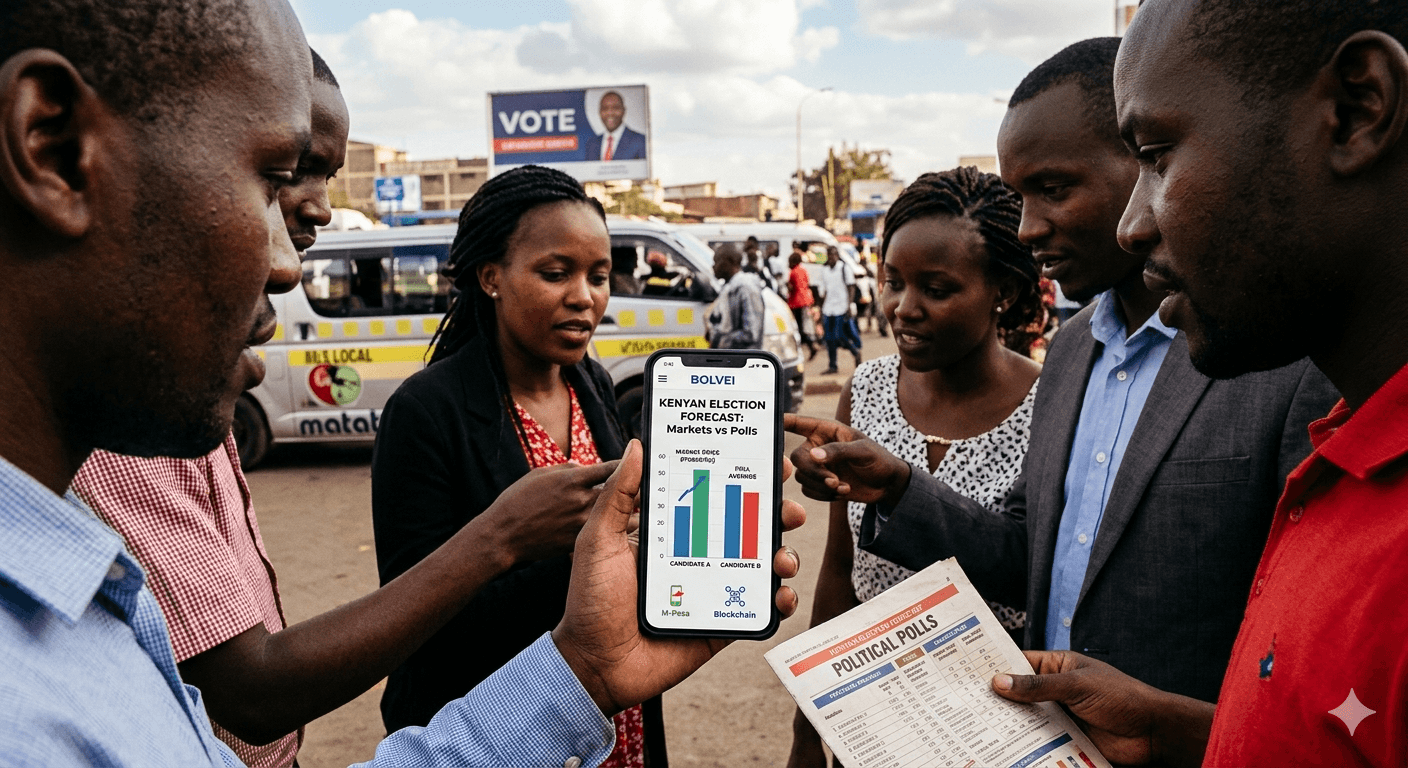
Kenyan Election Analysis: How Prediction Markets Outperform Polls
Elections are high-stakes events, defined by intense public interest and rapid shifts in sentiment. In Kenya, election cycles are not just news stories; they impact the economy, social cohesion, and the daily lives of citizens. During these periods, accurate information becomes critical. Everyone—from political strategists to business owners—is desperate to know who is in the lead.
For decades, traditional political polls have been the industry standard for measuring public opinion and forecasting outcomes. However, the last Kenyan election cycle exposed significant limitations in the traditional polling model. While pollsters provided a conflicting series of snapshots, emerging prediction markets like Bolvei offered a surprisingly accurate and dynamic alternative.
This is not a story about gambling; it is a story about information efficiency. When combined with the speed and transparency of blockchain technology and local integration with M-Pesa, prediction markets are transforming how we understand Kenyan political analysis.
The Flaws of Traditional Polls in Kenya
To understand why prediction markets work, we must first analyze where traditional polls fail, particularly in the Kenyan context. Polls are, by design, limited tools that capture a moment in time through a sample population.
Subheading: The Problem of Bias and "Spin"
The most significant challenge facing Kenyan polling is the perception (and often the reality) of bias. Many polling firms have known political affiliations, or their methodologies are structured to produce results favorable to a specific candidate or coalition. This creates a landscape where opposing sides can simultaneously release polls showing their candidate leading, confusing the public and undermining trust in data. Prediction markets, by contrast, are neutral mechanisms driven solely by the financial conviction of the traders.
Subheading: Timing and Lag
Polls are slow. From designing the survey and conducting the fieldwork (often via telephone or in-person interviews across different counties) to analyzing the data and releasing the report, traditional polling involves significant time lag. In the fast-moving world of Kenyan politics, a poll released today often reflects the reality of a week ago. Prediction markets operate 24/7 in real-time. When a breaking news event occurs—such as a major candidate endorsement or a viral political gaffe—market prices adjust instantly, whereas the public must wait days for a new poll to measure the impact.
Subheading: Sample Intensity vs. Sample Size
Traditional polls measure the number of people who express an opinion, treating a casual voter the same as a die-hard supporter. Prediction markets measure the intensity and conviction of belief through financial commitment. If you strongly believe a candidate will win, you are willing to commit more KES than someone who is undecided or casually leaning toward a position. This depth of conviction, weighted by money, often proves to be a more accurate predictor of voter turnout and final results than simple stated preference in a phone survey.
The Mechanics of Prediction Markets and Financial Conviction
Prediction markets, sometimes called information markets or decision markets, derive their accuracy from the fundamental economic concept of "Skin in the Game." This is the principle that forecasts are more reliable when the forecasters have a personal stake in being accurate.
When you participate in a political prediction market on a platform like Bolvei, you are not simply expressing an opinion; you are making a financial forecast. If your forecast is incorrect, you lose your stake. This financial pressure changes behavior. It forces participants to:
Move Beyond Emotion: Traders filter out their personal political biases and focus on the cold reality of probability. Your hope that a candidate wins does not make it so, and risking KES on hope is a fast way to lose capital.
Seek Out Better Information: Traders are incentivized to find the most accurate, unfiltered information possible. They will scour local news reports, analyze voter registration numbers, and look at economic indicators that traditional pollsters might miss.
Update Beliefs Rapidly: When new information breaks, the incentive structure forces immediate action.
This process transforms individual opinions into an aggregated, accurate probability score.
Subheading: The Wisdom of the Crowd vs. the Pollster
A poll collects responses and averages them. A prediction market synthesizes disparate information. This is the difference between "opinion harvesting" and "market signal generation." The crowd is often wiser than any single expert or algorithm, and a well-structured market is the best way to extract and measure that wisdom. When thousands of people across Kenya commit real KES to their beliefs about the KES/USD exchange rate [Link to current KES market], they provide a more accurate forecast than any central economic report. The same holds true for political forecasting.
Legitimacy: Not Gambling, but Information
The idea of "betting on elections" often attracts negative attention and accusations of reducing serious political processes to mere entertainment. However, this perspective fundamentally misunderstands the purpose of prediction markets.
While some individuals participate for the thrill of the potential payout, the output of a prediction market is invaluable public information. The market price—for example, a 75 KES price on "Yes" meaning a 75% probability of occurrence—is an unfiltered, highly reactive probability score.
Subheading: A Tool for Informed Decisions
This probability score serves as a critical information tool for multiple sectors in Kenya:
Business Owners: Accurate political forecasting allows businesses to plan for stability or volatility, manage inventory, and make investment decisions. The Kenyan Shilling often fluctuates during election cycles, and understanding the likelihood of different political outcomes helps businesses hedge against currency risk.
Political Strategists: Markets reveal the true perception of a candidate’s viability, cutting through the propaganda generated by their own campaigns.
The Media: Journalists can use market data to provide objective context to their reporting, comparing campaign rhetoric against the cold logic of the marketplace.
Citizens: Instead of relying on conflicting spin from political actors, Kenyans get a neutral, probability-based forecast of the future. This empowers voters with better information.
Prediction markets are information tools that leverage a market mechanism. Just as a commodity market (e.g., fuel prices) provides information about global supply and demand, a political prediction market provides information about public expectation and belief.
The Future of Political Analysis in Kenya
The success of prediction markets in forecasting the last Kenyan election cycle points to a paradigm shift in political analysis. The unique combination of factors now present in Kenya makes platforms like Bolvei ideally positioned to lead this transformation.
M-Pesa Integration: The ability to instantly deposit and withdraw KES via mobile money removes the high barrier to entry that has historically restricted participation in global prediction markets.
Blockchain Transparency: Using the BNB Chain to settle markets ensures that transaction history is transparent, payouts are automated via smart contracts, and the final results are verifiable on a public ledger, eliminating distrust in the settling mechanism.
Local Focus: Markets built specifically for Kenyan issues, such as fuel price changes [Link to Current Fuel Price Market] or specific county elections, generate the high participation levels necessary for informational accuracy.
As Kenyans become more comfortable with this technology, we expect to see prediction market data increasingly integrated into mainstream political analysis and decision-making. The demand for accurate, fast, and unbiased information is constant, and prediction markets are the first tool designed specifically to meet that need.
Place your first forecast at bolvei.com

Bolvei Data Team
We break down the data behind active markets. Read the facts, choose 'Yes' or 'No' based on your forecast, and earn rewards when you're right.
Kenyans know their country.
You get the profit.
Pick an outcome. Stake KES via M-Pesa. Earn when you're right. Join 5,000+ others forecasting real-world events.
Recommended for you

How to Make Money Creating Markets on Bolvei
: Earn passive income in Kenya by creating prediction markets on Bolvei. Learn how to turn your knowledge into KES with our 5% creator revenue share model.
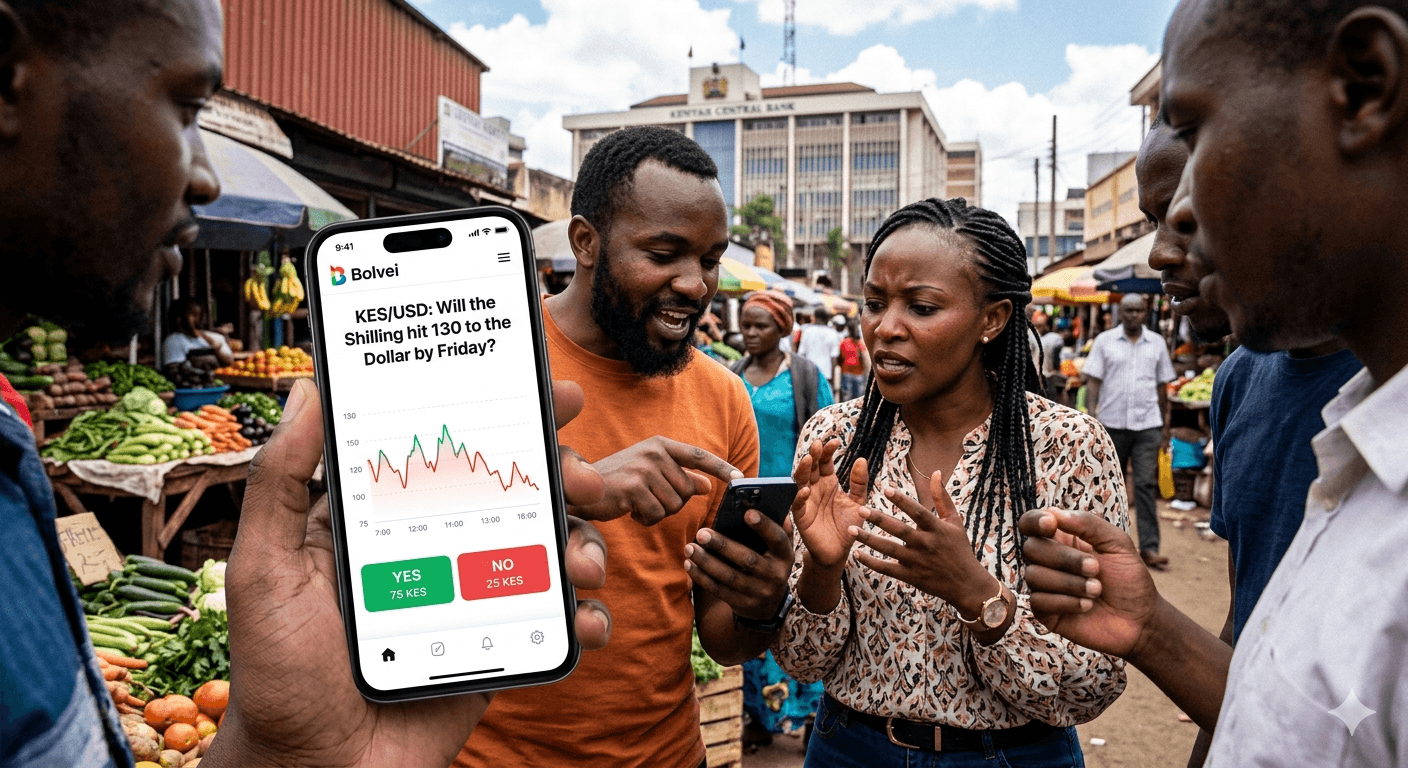
What is the Kenyan Shilling Prediction Market
Trade the KES/USD exchange rate on Bolvei. Learn how prediction markets use the wisdom of the crowd to forecast if the shilling will hit 130 to the dollar.